Is a folding bike worth it for small flats and shared storage?
Short on space? This guide weighs the real pros and cons of folding bikes when compact storage matters more than ride feel or top speed, with honest trade-offs for UK riders.
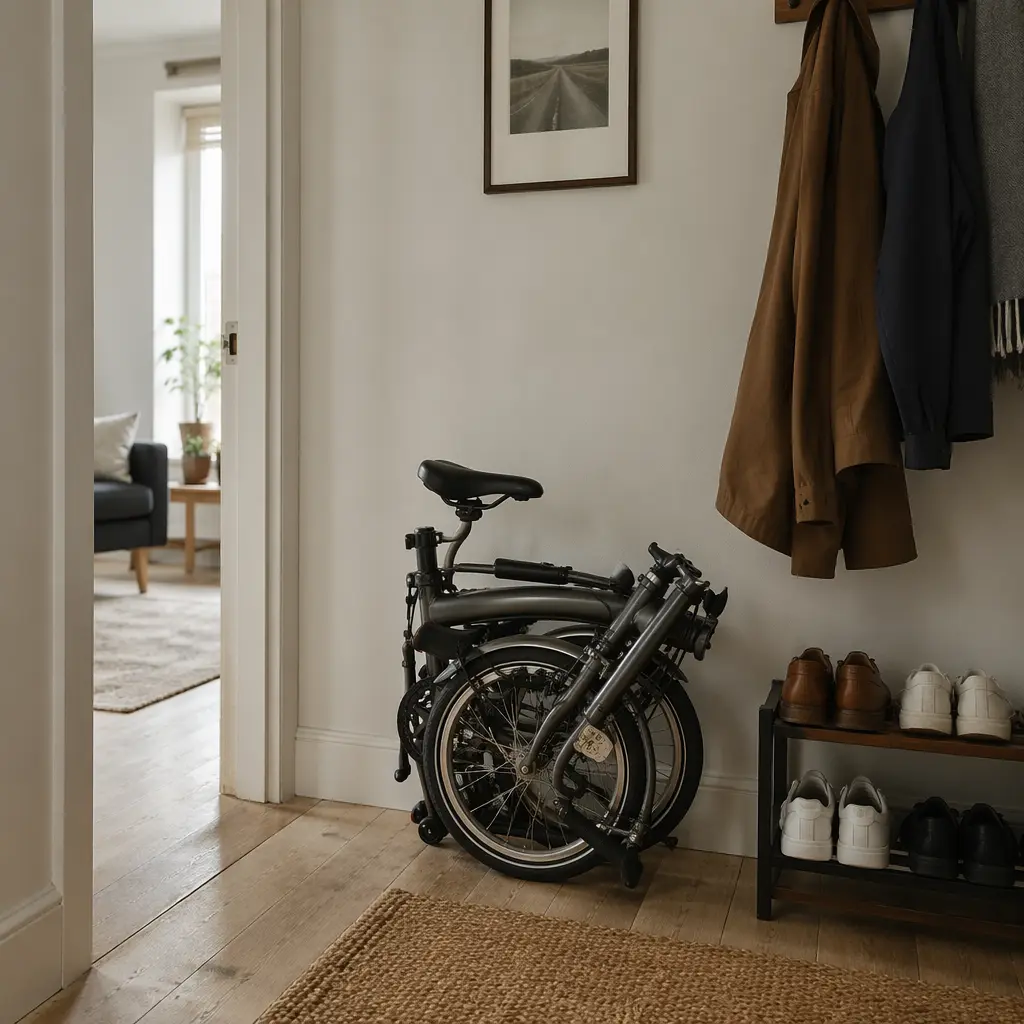
If bike storage is the main problem — not hills, speed or weekend epics — a folding bike can make sense in ways a full-size bike never will. This guide looks at whether a folder is actually worth it for small flats and shared storage, where compactness matters more than ride feel or outright pace.
What you actually get at this price
Most folding bikes prioritise storage size over performance. The money goes into hinges, latches and frame design rather than lightweight parts. Even so, modern folders are more usable than their reputation suggests — especially for short urban trips.
At typical entry-to-mid folding bike prices, expect practical, durable kit rather than sporty components. The ride will feel different to a hybrid or road bike, but the payoff is being able to tuck the bike away where nothing else fits.
- Frame: steel or basic aluminium with one or two folding hinges
- Wheels: small diameter (usually 16–20 inch) for compact storage
- Gearing: limited range, often 6–8 speeds or a simple hub gear
- Brakes: basic V-brakes or cable discs on newer designs
- Weight: heavier than it looks once hinges and reinforcements are counted
- Extras: some include mudguards or racks, but lights are often optional
How to choose
Start with where the bike will live. Measure the cupboard, hallway corner or shared storage area and compare it with the folded dimensions — not just wheel size. Some bikes fold smaller but take longer; others fold quickly but stay bulky.
Think honestly about how far and how often you’ll ride. Folding bikes suit short commutes, linking with trains, or errands where you want the bike indoors. If rides are under 5 miles and mostly flat, the compromises are easier to live with.
What to look out for
- Flex at the hinge under pedalling, especially on cheaper frames
- Limited adjustability for taller riders
- Small wheels that struggle on potholes and dropped kerbs
- Basic saddles and grips that need upgrading
- Awkward folded shapes that don’t actually stand up on their own
Worth spending more on
On a folding bike, small upgrades can dramatically improve day-to-day comfort. A better saddle and decent tyres reduce harshness from small wheels more than any frame change.
If the bike lives in shared storage, a compact but strong lock is also money well spent. Folding bikes attract attention precisely because they’re portable.
Frequently asked questions
Are folding bikes uncomfortable?
They can be, especially on rough roads, but discomfort usually comes from tyres and saddle rather than the folding frame itself. Upgrading contact points helps a lot.
Can a folding bike replace a normal bike?
For short urban trips, yes. For longer rides, hills or fitness riding, most people still prefer a full-size bike.
Are folding bikes allowed on trains?
In the UK, most train operators allow folding bikes at any time when folded, making them popular for mixed-mode commuting.
If space is the limiting factor, a folding bike is often the most realistic way to keep cycling at all — as long as you accept the ride compromises and choose with storage in mind.
Find these on Amazon
As an Amazon Associate, CheapBikes earns from qualifying purchases.