£500 vs £1,000 road bikes: what actually changes?
Double the budget doesn’t double the speed. Here’s what £1,000 buys over £500 on a road bike — from smoother shifting and braking to weight, comfort and long‑ride confidence.
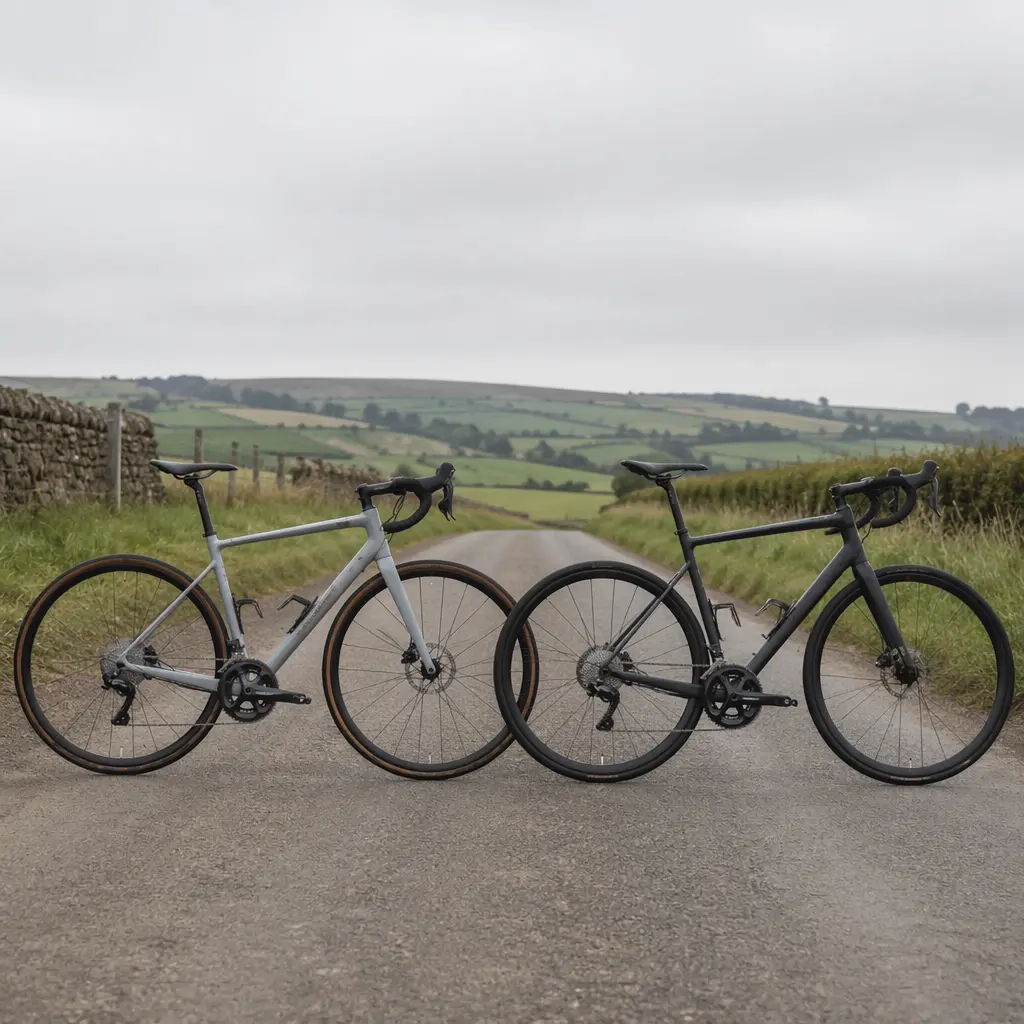
Road bikes at £500 and £1,000 often look similar on the shop floor: drop bars, skinny tyres, aluminium frames. On the road, though, the differences show up in subtler ways. This comparison is for UK riders deciding whether doubling the budget actually improves speed, comfort and day‑to‑day enjoyment — or whether a cheaper bike already does most of the job.
What you actually get at this price
At £500, a new road bike is built to hit a price target first and a performance target second. Frames are usually aluminium with a basic carbon or alloy fork. Components focus on durability and cost control rather than finesse. At £1,000, the frame material may still be aluminium, but tubing quality, finishing and parts selection take a noticeable step up.
The ride difference comes less from headline features and more from how consistently everything works together, especially under load, in bad weather, or after a few thousand miles.
- Groupset: £500 bikes typically use entry‑level 8–9 speed drivetrains with external cables; £1,000 moves into smoother‑shifting 10–11 speed systems with better ergonomics.
- Brakes: Mechanical disc or basic rim brakes at £500; stronger calipers or better mechanical discs at £1,000 with improved modulation.
- Frame & fork: Both are usually aluminium frames; the pricier bike often has a lighter, better‑damped fork and neater welds.
- Wheels: Heavy, sturdy wheels at £500; lighter rims and better hubs at £1,000 that spin up faster.
- Finishing kit: Basic saddle, bar tape and seatpost vs more forgiving contact points.
- Extras: Neither price usually includes mudguards or lights, but £1,000 frames more often have discreet mounts.
How to choose
The right budget depends on how and where the bike will be ridden. Short fitness rides and occasional weekend loops don’t demand the same refinement as long sportive days or winter training. A £500 bike can be perfectly capable if fit is right and expectations are realistic.
Fit and geometry matter more than component count. Both price points tend to offer endurance‑leaning road geometry, but £1,000 bikes often feel calmer at speed and less harsh over rough tarmac. Riders planning longer distances or frequent riding tend to appreciate that extra stability and comfort.
What to look out for
- Weight creep: £500 bikes are commonly 1–2kg heavier, mostly in wheels and finishing kit.
- Shifter feel: Entry‑level shifters work, but feel vague under load.
- Brake performance: Stopping power in the wet can be a weak point on cheaper setups.
- Tyres: Stock tyres are often hard and narrow; comfort suffers until they’re replaced.
- Upgrade limits: Very cheap wheels and drivetrains can cap future upgrades.
Worth spending more on
The biggest gains from £500 to £1,000 are consistency and comfort rather than raw speed. Smoother shifting reduces fatigue on long rides, while better wheels make the bike feel more responsive even if average speed barely changes.
If stretching the budget isn’t possible, some upgrades deliver a similar feel later. Quality tyres, padded bar tape and a saddle that suits the rider can transform a cheaper bike for relatively little money.
Frequently asked questions
Is a £1,000 road bike faster?
In a straight line, not by much. The speed difference usually comes from better wheels and tyres, but fitness still matters far more than price.
Does comfort really improve with price?
Yes, especially on longer rides. Better forks, wheels and contact points reduce road buzz and hand fatigue.
Are £500 road bikes reliable?
Generally yes, but they need more frequent adjustment and maintenance, particularly brakes and gears.
Should beginners spend £1,000?
Not necessarily. A well‑fitted £500 bike is enough to start. Upgrade later once riding habits are clear.
In short, £500 buys access to road cycling; £1,000 buys refinement. The right choice depends on how often and how far the bike will be ridden.
Find these on Amazon
As an Amazon Associate, CheapBikes earns from qualifying purchases.