£400 vs £800 mountain bikes: what trail control do you gain?
Is spending £800 on a mountain bike really twice as good as £400? This plain‑English comparison explains where fork quality, brakes and tyres start to deliver real control on UK trails.
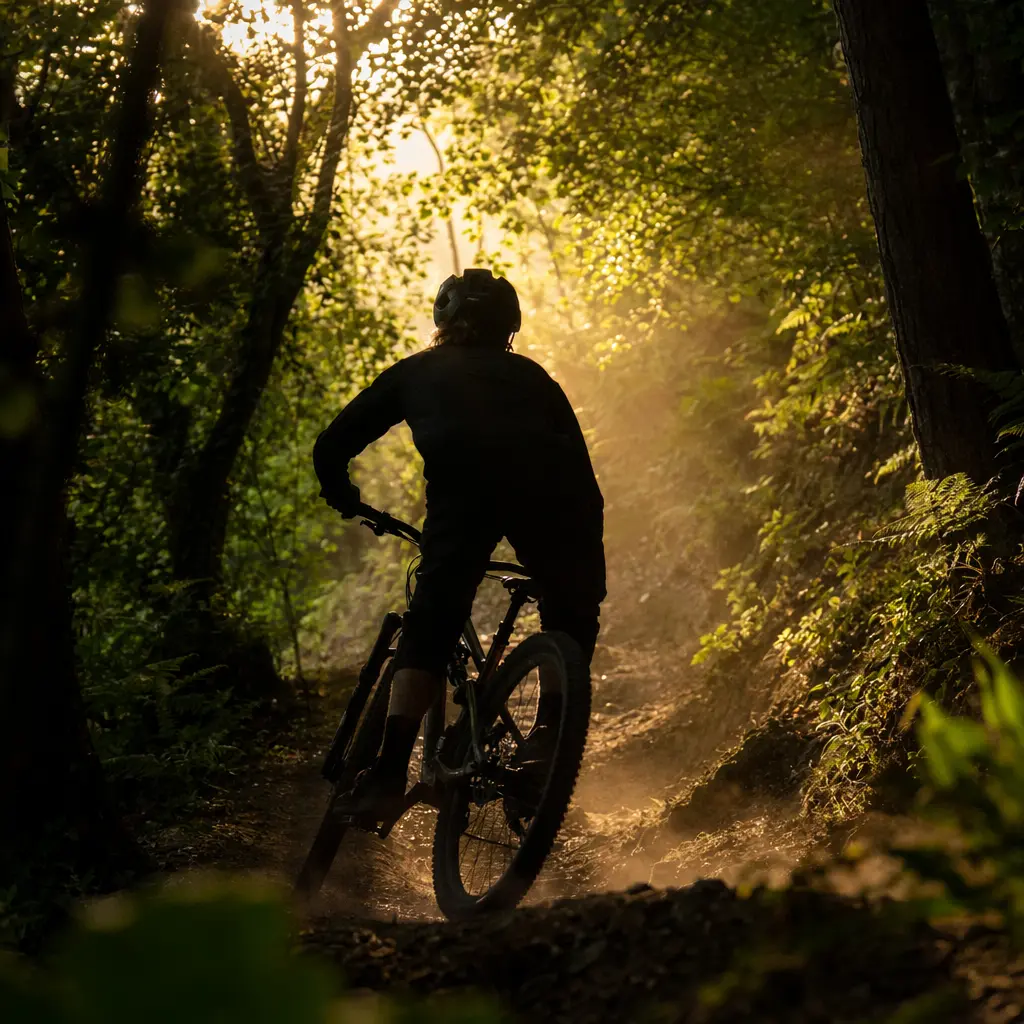
The jump from a £400 to an £800 mountain bike is one of the most common upgrade questions in UK cycling. On paper the bikes look similar: aluminium hardtail frames, front suspension and wide handlebars. On the trail, though, the differences can be more meaningful than the price gap suggests. This guide explains where that extra £400 actually goes, and how much extra control it buys you on real UK off‑road riding.
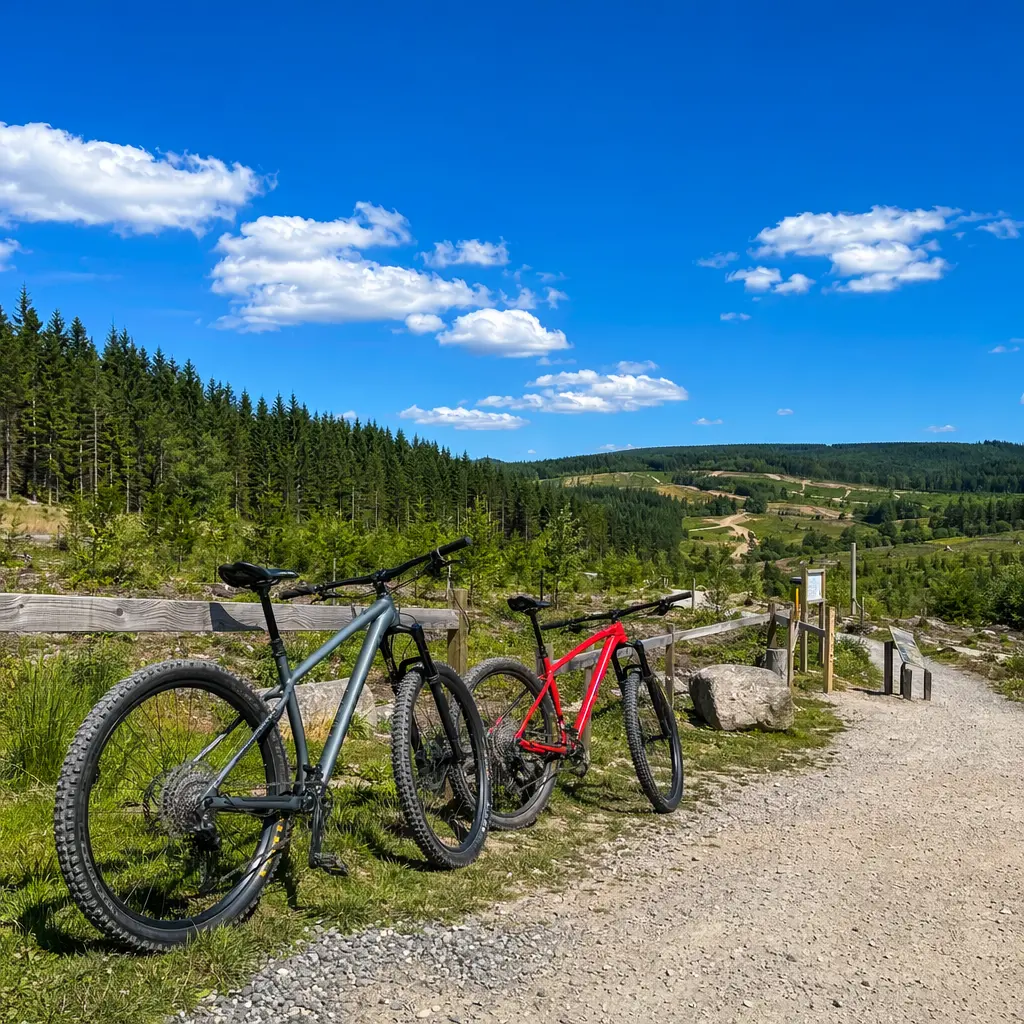
What you actually get at this price
At £400, most mountain bikes are built to hit a price target first and a performance goal second. They are designed to survive potholes, towpaths and the odd trail centre visit, rather than repeated rough riding. At £800, the focus starts to shift towards consistency and control when the ground gets uneven.
The biggest gains are usually in the parts that directly affect grip, braking and how the bike tracks over bumps. The frame itself often changes less than people expect.
- Fork: £400 bikes usually have a basic coil‑spring fork with limited damping; £800 bikes are more likely to use an air fork with adjustable pressure and rebound.
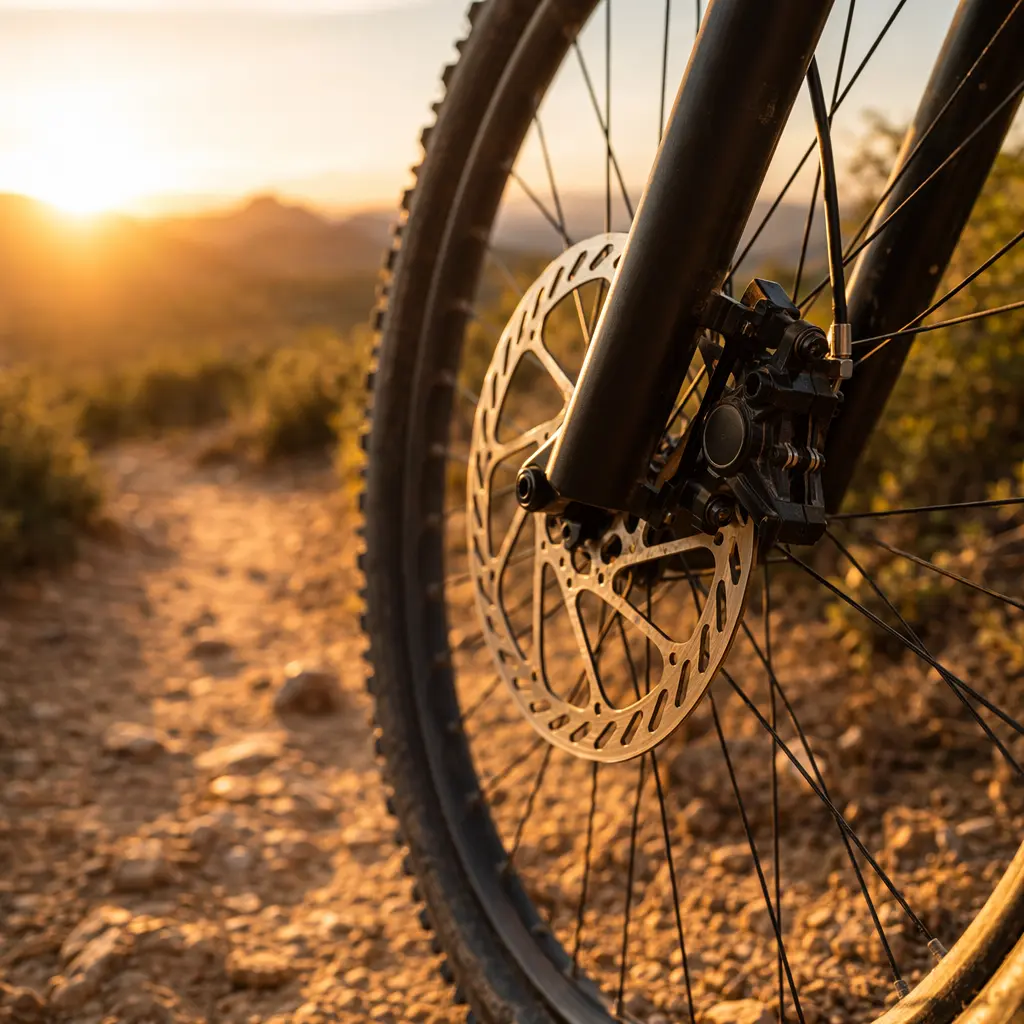
- Brakes: entry‑level cable discs at £400 versus entry‑level hydraulic discs at £800, with more power and better modulation.
- Tyres: harder rubber compounds and wire beads at £400; softer compounds and better tread patterns at £800.
- Drivetrain: wide‑range 2x or basic 1x gearing at £400; more refined 1x systems with clutches at £800.
- Wheels: heavier rims and hubs at £400; slightly lighter, stiffer wheels at £800.
- Frame: both are typically aluminium hardtails, but £800 frames often have more modern trail geometry.
How to choose
The right choice depends less on how fast you want to go, and more on where you ride. If your off‑road use is limited to canal paths, park loops and dry bridleways, a £400 bike can be perfectly serviceable. Once roots, rocks and steeper descents enter the picture, control becomes more important than outright speed.
Fit and geometry matter too. £800 bikes increasingly adopt longer, slacker trail geometry, which adds stability on descents and confidence through rough sections. Cheaper bikes tend to be more upright and twitchy, which feels fine on paths but less composed off‑road.
What to look out for
- Very heavy forks that add weight without improving control.
- Mechanical disc brakes that feel wooden in wet conditions.
- Cheap tyres with minimal grip on damp roots and mud.
- No clutch on the rear derailleur, leading to chain slap.
- Limited sizing options, making proper fit harder to achieve.
Worth spending more on
If £800 is out of reach, some upgrades can narrow the gap. Tyres are the biggest single improvement: better rubber can transform grip and confidence for relatively little money. Brake pads are another low‑cost upgrade that can improve feel and stopping power.
Conversely, if you can stretch from £400 to £800, the fork and brakes are the real win. These are expensive to upgrade later, and they define how controlled the bike feels on rough ground.
Frequently asked questions
Is an £800 mountain bike twice as good as a £400 one?
Not across the board, but in key areas it can feel like a bigger jump than the price suggests. Braking control, fork performance and tyre grip improve noticeably.
Can a £400 mountain bike handle trail centres?
Blue trails and smoother red sections are usually fine at sensible speeds. Repeated rough riding will highlight the limits of the fork and brakes.
Is it better to buy used at £800 instead?
Used can offer better components for the money, but condition matters. Worn forks and brakes can be costly to service, so factor this into the price.
Do full suspension bikes make sense at this budget?
At £800 or below, full suspension usually means heavier frames and poorer components. A hardtail generally offers better control and reliability.
In short, £400 mountain bikes are about access to off‑road riding, while £800 bikes are about confidence and control. If your riding regularly involves roots, rocks and steeper descents, the extra spend is easier to justify.
Find these on Amazon
As an Amazon Associate, CheapBikes earns from qualifying purchases.