Trek District: the belt‑drive city bike that keeps commuting simple
Trek’s District range is a lesson in low‑maintenance urban cycling: belt drive, hub gears and tidy fittings aimed squarely at everyday UK commuting without the faff.
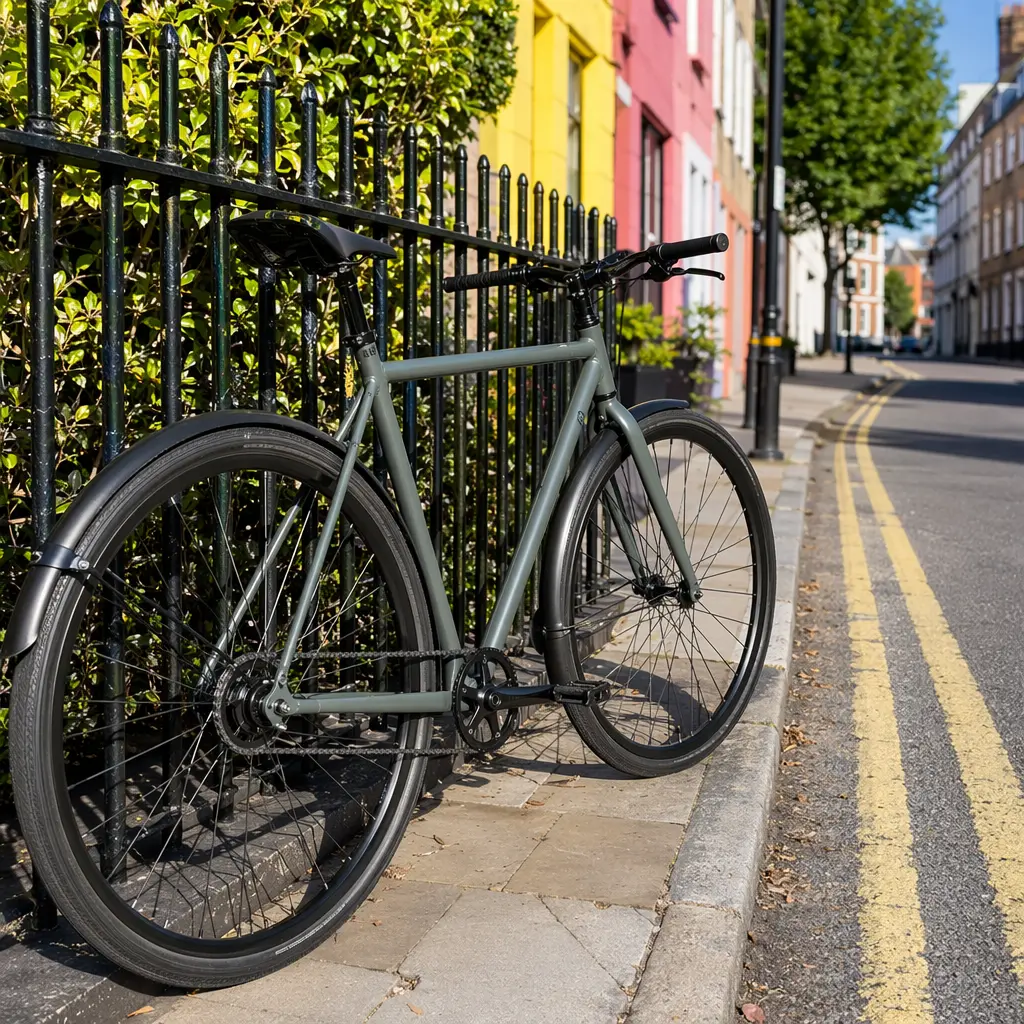
The Trek District is one of those bike families that quietly makes sense the moment you understand it. Designed as a no‑nonsense city bike, it puts reliability and low upkeep ahead of thrills, aiming at riders who want to get to work, the shops or the station with minimum fuss. In a UK market crowded with hybrids that still need regular chain cleaning and adjustment, the District’s belt‑drive approach stands out as a genuinely practical alternative.
Where it came from
The District sits within Trek’s long‑running push to make everyday cycling feel normal rather than niche. While Trek is best known in the UK for mountain bikes and road machines, the District range reflects the brand’s interest in European‑style urban transport: upright, practical and built to survive year‑round use.
Sold through Trek’s UK dealer network, the District has typically occupied the mid‑to‑upper end of the commuter category. It isn’t pitched as a bargain‑basement runabout, but as a durable, well‑finished city bike that can replace daily public transport. That positioning explains why the family has endured while trendier urban bikes have come and gone.
Why it works
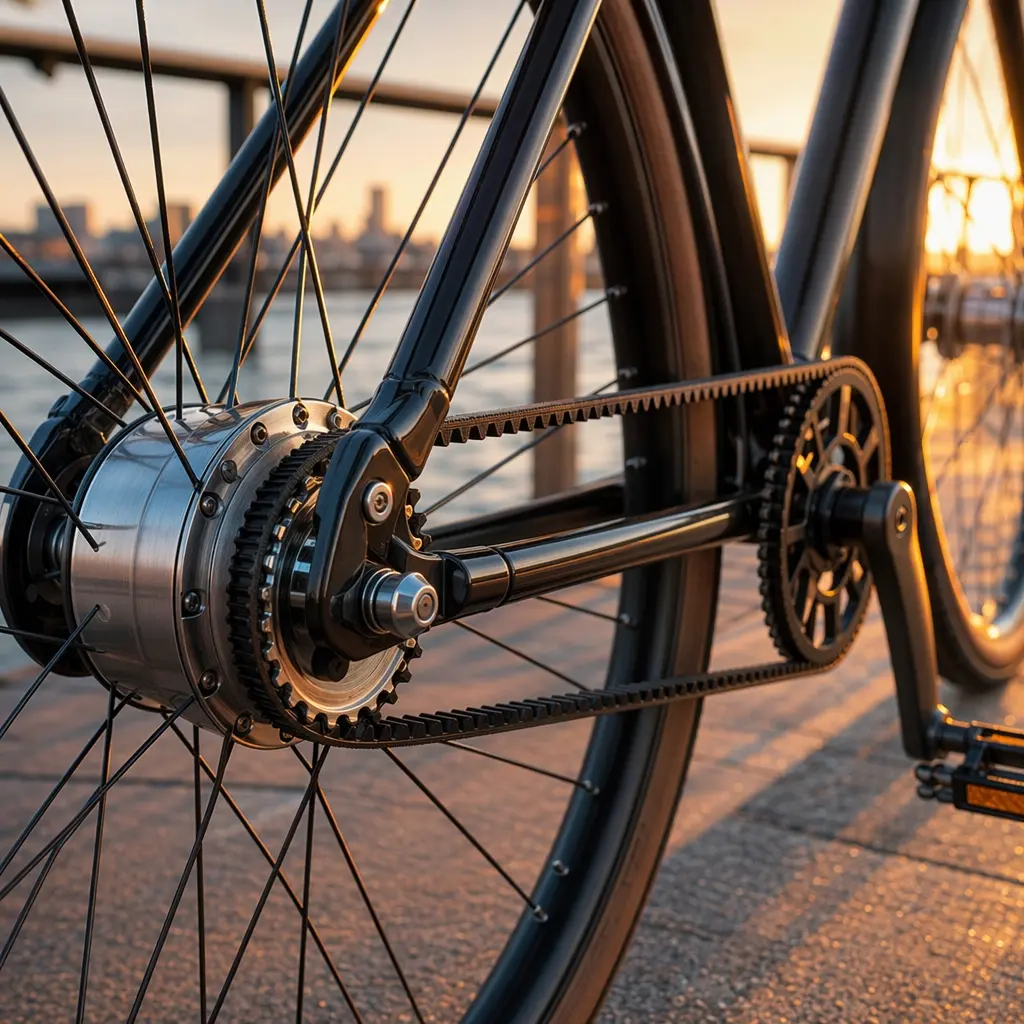
At the heart of the District concept is the belt drive. Instead of a metal chain, it uses a carbon‑reinforced belt paired with internal hub gears. For UK riders who commute in all weathers, that means far less cleaning, no oily trousers and dramatically reduced wear from road grit and winter salt.
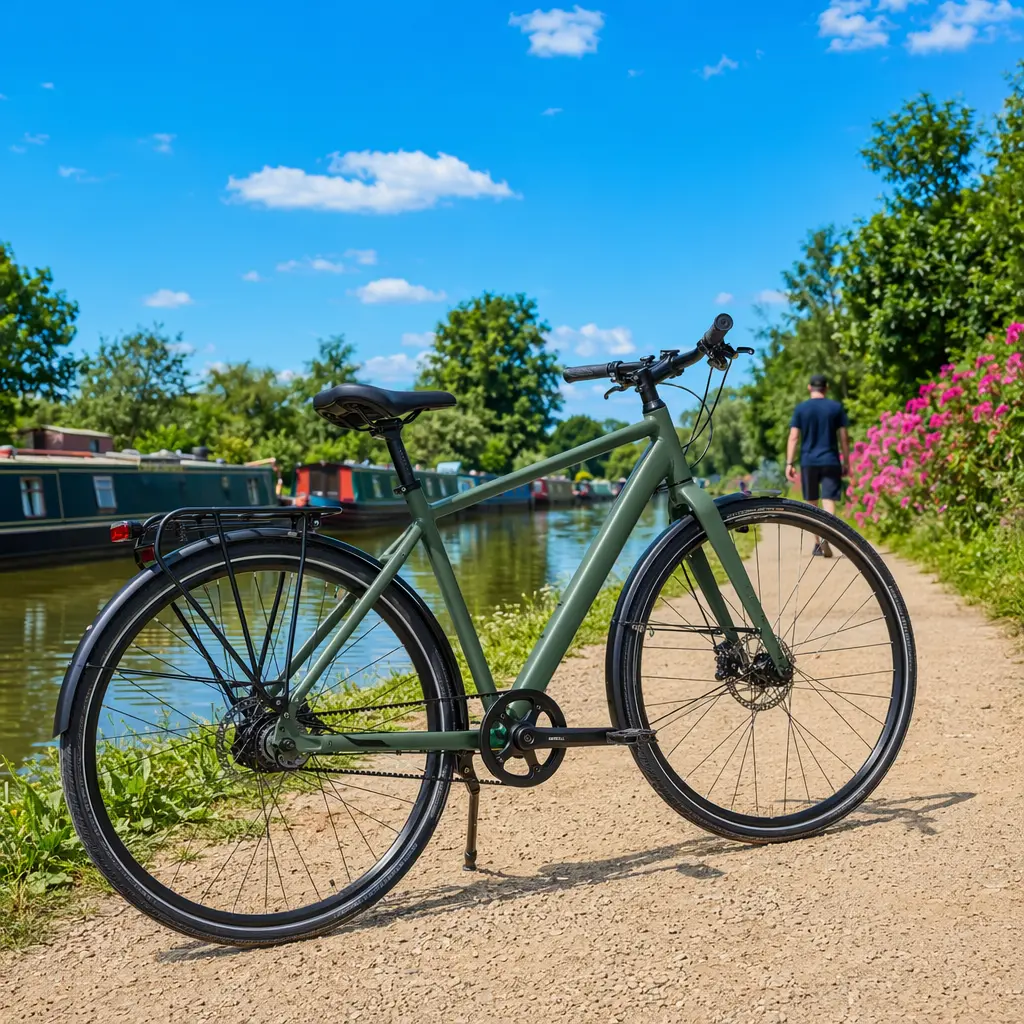
The rest of the design follows the same logic. Geometry is relaxed and upright for visibility in traffic and comfort over potholes. Frames are aluminium, keeping weight sensible without pushing costs into premium territory. The bikes are built to accept full‑length mudguards, racks and sensible tyres, rather than treating those as afterthoughts.
- Belt drive instead of a chain for clean, quiet running
- Internal hub gears that cope well with stop‑start city riding
- Upright geometry for comfort and traffic awareness
- Full mudguards and rack mounts as standard
- Practical tyre clearances for rough tarmac and kerbs
Who it’s for
The District is aimed squarely at everyday urban riders: commuters covering a few to ten miles each way, people replacing short car trips, and anyone who wants a bike that can live outside an office or flat without constant attention. It suits flatter routes best, though the hub gears cope well with rolling city terrain. Budget‑wise, it usually sits above basic hybrids, with new examples often around the £800–£1,200 bracket depending on trim, and good used ones appearing for less.
Variants and what to look for today
Over the years the District family has been offered in a handful of trims rather than a confusing sprawl of models. Entry versions tend to use simpler hub gearing and slightly heavier wheels, while higher trims add wider gear ranges, lighter components and occasionally dynamo lighting. The core idea remains the same across the range.
If you’re looking at a second‑hand District, focus on condition rather than spec. Check the belt for obvious damage, make sure the hub gears shift cleanly under light pedalling, and inspect the wheels for true. Replacement belts last a long time but aren’t cheap, so visible neglect is a red flag. On the plus side, frames and finishing kit tend to age well.
Frequently asked questions
Is a belt drive really worth it in the UK?
For year‑round commuters, yes. Belts shrug off rain and road salt far better than chains and need no lubrication. The trade‑off is a higher upfront cost and fewer gearing options than a traditional derailleur setup.
Can the Trek District handle hills?
Moderate hills are fine, especially on versions with wider‑range hub gears. Very steep, sustained climbs aren’t its natural habitat, but for typical UK towns and cities it’s well within comfort.
Is it heavy compared to a normal hybrid?
It’s not featherweight. The hub gears and robust fittings add some heft compared to a stripped‑back hybrid, but the weight is balanced and rarely noticeable at city speeds.
Does it work with panniers and child seats?
Rack compatibility is a strong point. Most District setups are happy with panniers, and many racks are rated for light child seats, making them practical family or shopping bikes.
In a world of flashy tech and constant upgrades, the Trek District’s appeal is refreshingly straightforward. It’s a city bike that values your time as much as your money, offering a calm, clean commute that just keeps rolling. For UK riders who want cycling to be easy rather than another job, that’s a compelling proposition.
Find these on Amazon
As an Amazon Associate, CheapBikes earns from qualifying purchases.